
Baby Tricycles & Bikes
 This item is discontinued.
 Explore similar products from our collection.
-
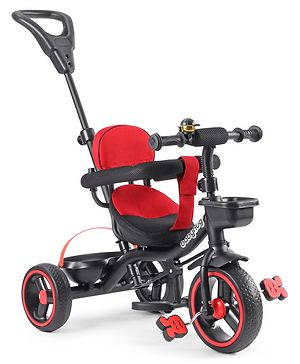
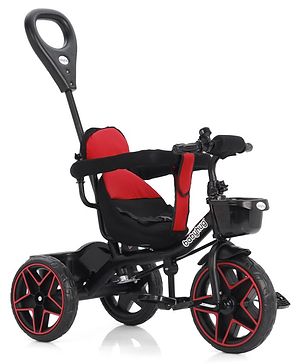
Babyhug Stalwart Plug & Play Tricycle With Parental Handle & Seat Cover - Red Black| High Backrest| Non-slip Pedals| Removable Safety Bar| Foldable Footrest| Puncture Proof Wheels| Durable Frame
Regular price₹4,395.00Regular price ₹2,944.65Regular priceUnit price per₹4,395.00Sale price ₹2,944.65 33% OFFSale -
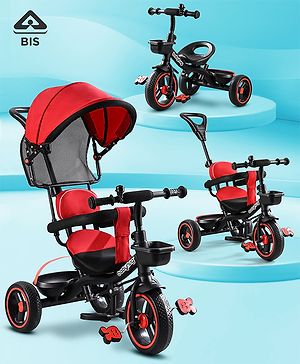
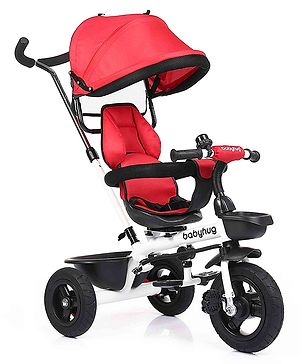
Babyhug Plug & Play Stallion Tricycle with Parental Push Handle & Foldable Canopy - Red Black| Foldable Footrest| Non Slip Pedal| High Backrest| Storage Basket| Removable Safety Rail| Cushion Seat
Regular price₹4,795.00Regular price ₹3,260.60Regular priceUnit price per₹4,795.00Sale price ₹3,260.60 32% OFFSale -
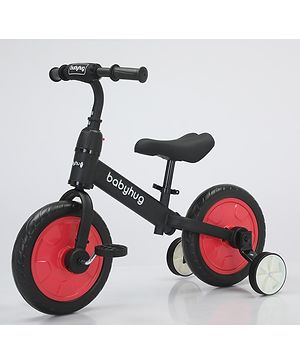
Babyhug 2 -1 Balance Bicycle 12 Inches - Red| Adjustable Seat Height| Removable Training Wheels| Removable Pedals| Puncture Proof Tyre
Regular price₹4,995.00Regular price ₹2,847.15Regular priceUnit price per₹4,995.00Sale price ₹2,847.15 43% OFFSale -
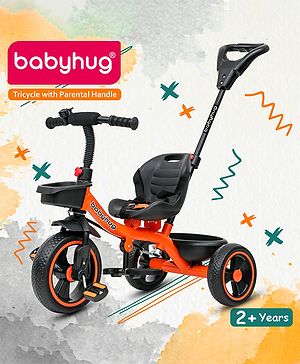
Babyhug Tricycle with Parental Push Handle-Orange| Safety Harness| Foldable Footrest| Storage Baskets| Anti-Slip Pedals| Adjustable Push Bar| Puncture Proof Wheels| Comfortable Seat| High Backrest
Regular price₹2,895.00Regular price ₹1,592.25Regular priceUnit price per₹2,895.00Sale price ₹1,592.25 45% OFFSale -
Babyhug AeroGlide DuoExplorer: 2-in-1 Twins Tricycle with Puncture Proof EVA Wheels - Yellow| Dual Seats & Parental Control Handle| Foldable Footrest| Safety Harness| Non-slip Pedals
Regular price₹3,595.00Regular price ₹2,157.00Regular priceUnit price per₹3,595.00Sale price ₹2,157.00 40% OFFSale -
Babyhug Little Leopard Tricycle for Kids with Parental Push Handle & Canopy Toddler Ride-On Trike with Safety Harness BIS Certified Seat with High Backrest Foldable Footrest Anti-Slip Pedals - Beige
Regular price₹3,845.00Regular price ₹2,499.25Regular priceUnit price per₹3,845.00Sale price ₹2,499.25 35% OFFSale -
Babyhug Speedy Bicycle With Bell - Pink White| Storage Basket| Durable Brake
Regular price₹6,495.00Regular price ₹3,572.25Regular priceUnit price per₹6,495.00Sale price ₹3,572.25 45% OFFSale -
Babyhug Plug & Play Gladiator Tricycle With Parental Push Handle & Cushion Seat - Yellow
Regular price₹4,295.00Regular price ₹2,534.05Regular priceUnit price per₹4,295.00Sale price ₹2,534.05 41% OFFSale -
Babyhug Plug & Play Tricycle with Parental Push Handle & Cushion Seat Red| High Backrest| Non-slip Pedals| Removable Safety Bar| Foldable Footrest| Puncture Proof Wheels
Regular price₹3,395.00Regular price ₹2,104.90Regular priceUnit price per₹3,395.00Sale price ₹2,104.90 38% OFFSale -
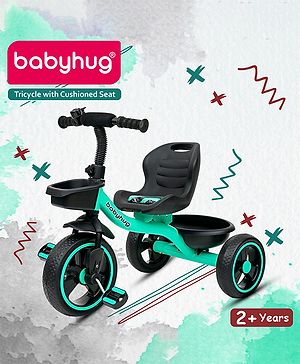
Babyhug Tricycle with Comfortable Seat & High Backrest|Storage Baskets| Anti-Slip Pedals| Puncture Proof Wheels| Easy to Assemble| Cushion Seat - Sea Green
Regular price₹2,595.00Regular price ₹1,401.30Regular priceUnit price per₹2,595.00Sale price ₹1,401.30 46% OFFSale -
Babyhug Hermes Glider 5 in1 Multifunctional Kids Plug & Play Trike|360° Rotatable Seat|Rubber Wheels with Brakes|Parental Handle with Canopy |Safety Harness|Storage Basket for Boys & Girls-Red
Regular price₹10,495.00Regular price ₹5,352.45Regular priceUnit price per₹10,495.00Sale price ₹5,352.45 49% OFFSale -
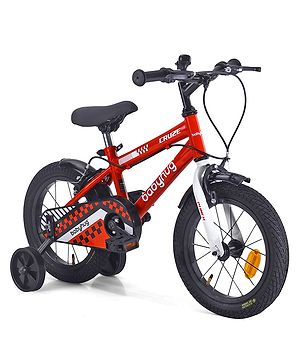
Babyhug Cruise Bicycle for Kids Cycle for 3 to 5 Years Boys & Girls 14T Inches- Red| 90% Pre-Installed| Sturdy Frame| Training Wheels| Durable Brake| Rubber Tyres| Height Adjustable Seat and Handle
Regular price₹6,295.00Regular price ₹3,902.90Regular priceUnit price per₹6,295.00Sale price ₹3,902.90 38% OFFSale
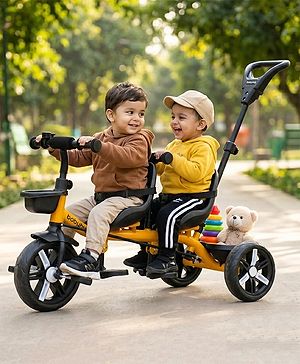
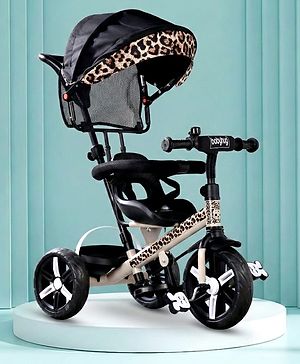
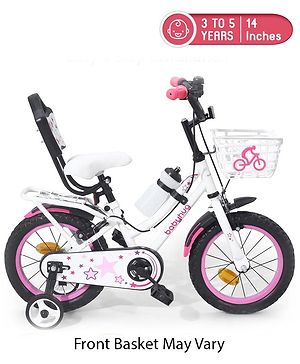
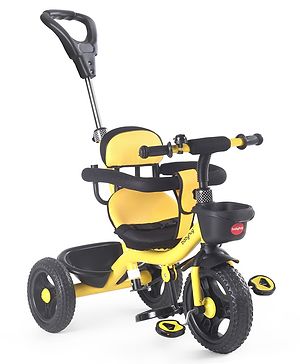
Baby & Kids Cycles for Safe, Fun & Active Outdoor Play
Best Tricycles, Balance Bikes & Bicycles for Kids
Cycles help children stay active while improving balance, coordination, confidence, and outdoor play skills. Whether it is a toddler’s first tricycle, a balance bike for early riding practice, or a standard bicycle for older children, the right cycle supports healthy physical development and encourages active play away from screens.
These cycles are designed to improve riding comfort, outdoor confidence, balance development, and safer everyday riding experiences for children across different age groups.
Choosing the Right Cycle for Every Stage of Childhood
Every child learns to ride differently, which is why choosing the right type of cycle based on age, confidence, and riding ability is important. Toddlers usually begin with stable tricycles that help introduce movement and coordination safely, while preschoolers often learn balancing skills faster using balance bikes.
As children grow older and more confident, standard bicycles with training wheels or independent pedal cycles help support outdoor adventures, physical activity, and riding confidence. Selecting an age-appropriate cycle improves comfort, safety, learning, and overall riding enjoyment for children.
Parents often prefer cycles that are:
- Lightweight and easy to handle
- Comfortable for longer riding sessions
- Durable for everyday outdoor use
- Safe with reliable braking systems
- Adjustable as children grow
Modern kids cycles are designed to support active play while making outdoor riding safer, smoother, and more enjoyable for growing children.
Why Cycling Is Important for Child Development
Cycling is more than just outdoor fun. It supports physical, emotional, and developmental growth during childhood.
Improves Balance & Coordination
Cycling helps children improve balance, steering control, and body coordination. These skills also support running, sports, and other physical activities later.
Builds Confidence & Independence
Learning to ride a cycle gives children a sense of achievement and independence. As riding confidence improves, children become more comfortable exploring outdoor spaces.
Encourages Active Outdoor Play
Cycles motivate children to spend more time outdoors and reduce screen dependency. Outdoor riding supports healthier activity habits and social interaction.
Strengthens Muscles & Physical Movement
Pedaling and steering help strengthen leg muscles and improve overall body movement and coordination.
Supports Emotional Development
Outdoor play and cycling often help improve mood, confidence, patience, and problem-solving abilities during learning stages.
Types of Baby & Kids Cycles
Different types of cycles are designed for different age groups and riding abilities.
Tricycles for Toddlers (1 to 3 Years)
Tricycles are ideal for younger children who are just beginning to learn balance and coordination. Their three-wheel design offers additional stability, making them safer for beginner riders.
Why Tricycles Are Good for Toddlers
- Provides maximum stability
- Easier for beginner riders
- Supports leg movement development
- Helps improve coordination
Common Features in Baby Tricycles
- Push handles for parents
- Safety guard rails
- Footrests
- Baskets and bells
- Comfortable seating
Baby tricycles are commonly preferred for toddlers because they provide controlled movement while encouraging active play and riding confidence.
Balance Bikes for Kids (3 to 5 Years)
Balance bikes help children learn balancing skills before transitioning to standard bicycles. These bikes do not include pedals, allowing children to focus completely on steering and balance.
Why Balance Bikes Are Recommended
Balance bikes are considered one of the best beginner riding options because they improve coordination naturally without overwhelming children with pedaling.
Benefits of Balance Bikes
- Improves balance faster
- Easier to control
- Builds confidence
- Encourages independent riding
- Supports smoother transition to bicycles
Children who use balance bikes often transition to regular bicycles more comfortably.
Bicycles for Kids (5+ Years)
Standard bicycles are suitable for older children who are ready for independent riding and outdoor adventures.
Features of Kids Bicycles
- Strong metal frames
- Adjustable seats
- Training wheel support
- Reliable braking systems
- Durable tires
- Comfortable handlebars
Kids bicycles are available in multiple sizes and styles to suit different riding abilities and outdoor conditions.
Training Wheel Cycles for Beginners
Training wheel cycles help beginner riders learn pedaling while maintaining additional side balance support.
Why Parents Choose Training Wheel Cycles
Training wheels help reduce falling risks during the learning stage and improve confidence for first-time riders.
Best for:
- Beginner riders
- Early riding practice
- Learning pedal control
- Confidence building
Training wheel cycles are commonly used before children transition to independent two-wheel riding.
How to Choose the Right Cycle for Kids
Choosing the right cycle depends on your child’s age, height, confidence level, and riding ability.
Check Child Height Before Age
Height is often more important than age while selecting a cycle. Proper sizing improves comfort, safety, and riding control.
Ensure Feet Touch the Ground
Children should comfortably place their feet on the ground while sitting on the seat. This improves stability and riding confidence.
Choose Lightweight Cycles
Lightweight cycles are easier for children to balance, pedal, and steer independently.
Check Handlebar Comfort
Easy-grip handlebars improve steering control and riding comfort during outdoor use.
Start with Beginner-Friendly Models
Tricycles, balance bikes, or training wheel cycles are usually better for first-time riders.
Kids Cycle Size Guide by Age
| Age Group | Recommended Wheel Size |
|---|---|
| 1 to 3 years | 10 to 12 inches |
| 3 to 5 years | 12 to 14 inches |
| 5 to 8 years | 16 to 18 inches |
| 8+ years | 20 inches |
Parents should prioritize proper fit and child height over age alone while selecting cycle sizes.
Best Cycles by Age Group
| Age Group | Best Cycle Type |
|---|---|
| 1 to 3 years | Tricycles & mini balance bikes |
| 3 to 5 years | Balance bikes & training wheel cycles |
| 5 to 8 years | Standard bicycles |
| 8+ years | Advanced bicycles & gear cycles |
Choosing age-appropriate cycles improves riding comfort, safety, and learning confidence.
What Features Should Parents Look for in Kids Cycles?
The right features improve riding safety, comfort, durability, and long-term usability.
Safety Features in Kids Cycles
Safety should always be the top priority when selecting a cycle for children.
Important Safety Features Include:
- Strong brakes
- Non-slip pedals
- Stable wheel structure
- Reflectors and bells
- Padded seating
- Secure handle grips
Parents should also ensure children use helmets and protective gear during riding.
Adjustable Seats & Handlebars
Adjustable features allow the cycle to grow with your child and improve long-term usability.
Benefits:
- Better riding posture
- Comfortable handling
- Easier height adjustments
- Extended usability
Adjustable cycles provide better value while improving riding comfort as children grow.
Durable Frame Construction
Strong frame construction improves long-term cycle durability during rough outdoor use.
Common Materials:
- Steel frames
- Aluminium frames
- Rust-resistant coatings
Durable cycles provide better stability and long-lasting outdoor performance.
Why Lightweight Cycles Are Better for Kids
Lightweight cycles are easier for children to handle, especially during beginner riding stages.
Benefits of Lightweight Cycles
- Easier steering control
- Better balance handling
- Reduced riding effort
- More beginner-friendly
- Easier maneuverability
Lighter bicycles help children feel more confident during riding practice.
Comfortable Design for Everyday Riding
Comfort-focused features encourage children to ride more regularly and enjoy outdoor activities.
Common Comfort Features:
- Padded seats
- Ergonomic grips
- Smooth pedals
- Comfortable riding posture
Comfortable cycles improve longer riding enjoyment and reduce riding fatigue.
Balance Bikes vs Training Wheels – Which Is Better?
| Feature | Balance Bikes | Training Wheel Cycles |
|---|---|---|
| Learning Focus | Balance & steering | Pedaling support |
| Best for | Early balancing | Beginner riding |
| Transition to Bicycle | Faster | Gradual |
| Control | Child-controlled balance | Supported balance |
Balance bikes are often preferred for faster balance learning, while training wheels provide additional beginner support during early riding stages.
Steel vs Aluminium Cycles – Which Is Better?
| Feature | Steel Cycles | Aluminium Cycles |
|---|---|---|
| Weight | Heavier | Lighter |
| Durability | Very strong | Rust-resistant |
| Best For | Rough outdoor usage | Easy handling |
| Maintenance | Moderate | Easier maintenance |
Steel cycles are commonly preferred for durability, while aluminium cycles are often easier for younger children to handle.
Indoor vs Outdoor Kids Cycles
Indoor Riding Cycles
Smaller tricycles and balance bikes work better on smooth indoor surfaces and compact spaces.
Best for:
- Apartments
- Indoor activity
- Beginner movement practice
Outdoor Riding Cycles
Larger bicycles are designed for parks, roads, pavements, and outdoor riding areas.
Best for:
- Parks
- Outdoor rides
- Long-distance riding
- Active outdoor play
Outdoor cycling helps children stay physically active while improving confidence and coordination.
How to Teach a Child to Ride a Cycle
Learning to ride should be gradual, safe, and confidence-building.
Start with Balance Practice
Children should first become comfortable balancing and steering before focusing on speed.
Use Flat & Safe Surfaces
Smooth pavements or parks help improve safer beginner riding experiences.
Practice Short Sessions
Short practice sessions help children learn without becoming frustrated or tired.
Encourage Confidence Slowly
Positive encouragement helps children become more comfortable during learning stages.
Always Use Safety Gear
Helmets and pads should always be used during practice and outdoor rides.
Safety Tips for Kids While Cycling
Safe riding habits are important for reducing injury risks during cycling.
Important Safety Tips
- Always wear helmets
- Use knee and elbow guards
- Avoid traffic-heavy roads
- Check brakes regularly
- Ride on smooth surfaces
- Supervise toddlers during riding
Children should also avoid slippery or uneven surfaces while learning to ride.
Best Outdoor Surfaces for Kids Cycling
Smooth and controlled surfaces provide safer riding experiences for children.
Recommended Riding Surfaces
- Parks
- Cycling tracks
- Smooth pavements
- Open playground areas
Surfaces to Avoid
- Wet roads
- Gravel surfaces
- Uneven terrain
- Busy traffic areas
Safer riding environments help improve confidence and reduce falling risks.
Kids Cycle Maintenance Tips
Proper cycle maintenance improves safety, durability, and riding performance.
Important Maintenance Tips
- Check brakes regularly
- Keep tires properly inflated
- Tighten loose parts
- Clean pedals and chains
- Store cycles indoors
Regular maintenance helps improve safer and smoother riding experiences.
Common Signs a Cycle Is Too Big for a Child
An oversized cycle may become difficult and unsafe for children to handle.
Warning Signs Include:
- Feet cannot touch the ground
- Difficulty steering
- Child feels uncomfortable riding
- Poor balance control
- Trouble reaching handlebars
Choosing the correct size improves comfort, confidence, and riding safety.
Common Mistakes Parents Make While Buying Kids Cycles
Choosing the Wrong Size
Oversized cycles may reduce riding confidence and make steering difficult.
Ignoring Cycle Weight
Heavy cycles are harder for younger children to balance and pedal.
Prioritizing Design Over Safety
Safety features and riding comfort should always come before appearance.
Buying Advanced Cycles Too Early
Beginners usually learn better using simpler and beginner-friendly cycles.
Skipping Adjustable Features
Adjustable seats and handlebars improve long-term usability as children grow.
Quick Kids Cycle Buying Checklist
- Correct cycle size – Improves riding comfort, balance, and safer handling.
- Lightweight frame – Easier for children to steer and control independently.
- Strong brakes – Helps improve riding safety and stopping control.
- Adjustable seat – Supports growing children and long-term usability.
- Comfortable grips – Improves steering comfort during longer rides.
- Stable wheel structure – Helps improve balance and riding confidence.
- Child-friendly pedals – Easier pedaling improves beginner riding support.
- Durable construction – Better for rough outdoor use and long-term performance.
- Safety accessories – Reflectors, bells, and guards improve riding safety.
- Easy steering control – Helps children learn riding more comfortably.
This checklist helps parents choose safer, more comfortable, and age-appropriate cycles for children.
FAQs Asked by Parents Around Baby & Kids Cycle
What is the best cycle for kids?
The best cycle depends on the child’s age, height, and riding ability. Toddlers usually benefit from tricycles, while older children can use bicycles or balance bikes.
What size cycle is best for a 4-year-old?
Most 4-year-olds usually require a 12 to 14 inch wheel cycle depending on height and riding confidence.
Which is better: balance bike or training wheels?
Balance bikes help children learn balancing faster, while training wheels provide additional support during beginner riding stages.
What is the safest cycle for toddlers?
Tricycles with wide wheels, sturdy frames, and parental push handles are commonly considered safer options for toddlers.
How do I choose the right cycle for kids?
Parents should consider height, age, riding ability, cycle weight, and safety features before choosing a cycle.
What is the typical kids cycle price in India?
Kids cycle prices in India usually range between ₹1,500 and ₹10,000 depending on size, features, and build quality.
Are training bikes good for learning balance?
Yes, training bikes and balance bikes both help children improve coordination, confidence, and riding control.
Can boys and girls use the same cycle?
Yes, most kids cycles are unisex and differ mainly in colours, graphics, and design styling.
What safety gear is essential for kids?
Helmets, knee pads, and elbow pads are commonly recommended for safer cycling activities.
At what age can children start riding cycles?
Many toddlers can begin using tricycles around 1 to 3 years, while balance bikes are commonly introduced between 3 and 5 years.