
Door Stoppers & Guards
 This item is discontinued.
 Explore similar products from our collection.
-
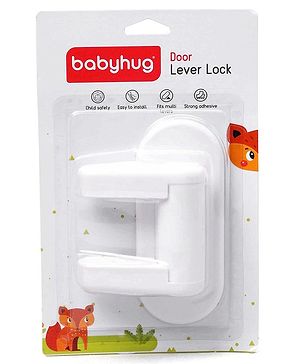
Babyhug Door Lever Lock
Regular price₹245.00Regular price ₹115.15Regular priceUnit price per₹245.00Sale price ₹115.15 53% OFFSale -
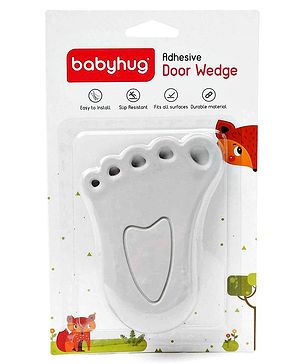
Babyhug Adhesive Door Wedge - White
Regular price₹245.00Regular price ₹115.15Regular priceUnit price per₹245.00Sale price ₹115.15 53% OFFSale -
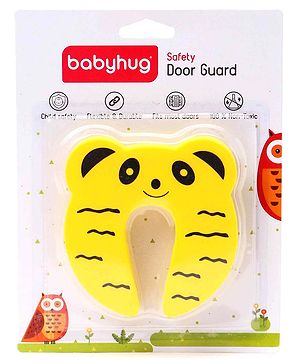
Babyhug Door Stopper - Yellow
Regular price₹195.00Regular price ₹150.15Regular priceUnit price per₹195.00Sale price ₹150.15 23% OFFSale -
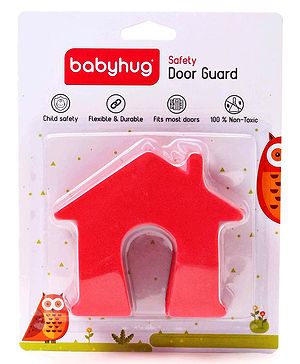
Babyhug EVA House Shape Door Stopper Pack of 2 (Colour May Vary)
Regular price₹195.00Regular price ₹150.15Regular priceUnit price per₹195.00Sale price ₹150.15 23% OFFSale -
Babyhug Door Stopper - Green
Regular price₹195.00Regular price ₹107.25Regular priceUnit price per₹195.00Sale price ₹107.25 45% OFFSale
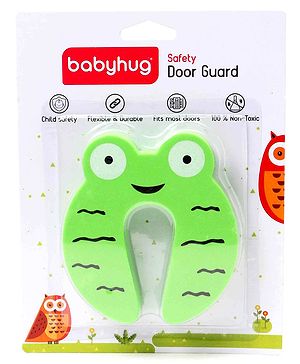
Babyhug Door Stoppers & Guards for Babies | Safer Childproofing at Home
As babies begin crawling, standing and walking, doors can become an unexpected safety hazard. A door that suddenly swings shut can trap little fingers, while an easily accessible door may allow a curious toddler to enter areas that are not suitable for unsupervised access.
Door stoppers and guards help parents create safer doorways by controlling door movement or restricting access where appropriate. They can be useful in bedrooms, bathrooms, kitchens, living spaces and other areas where young children are beginning to explore.
The Babyhug collection includes different types of door safety solutions, including door stoppers, flexible door stops, adhesive door wedges and door lever locks, allowing parents to choose a solution according to the type of door and the safety concern they want to address.
Why Are Door Stoppers & Guards Important for Babies?
Doors can create two different types of risks for young children.
A moving door can close unexpectedly and cause a finger-pinch or impact injury, particularly when a child is holding the door frame or playing near the hinges.
An accessible door can also give a toddler entry into areas such as bathrooms, kitchens, balconies or storage spaces that may contain additional hazards.
Door safety products can therefore help by:
- Keeping a door from closing completely
- Reducing the chance of fingers being caught
- Controlling unwanted door movement
- Restricting access through selected doors
- Adding an extra layer of childproofing around the home
These products should complement, rather than replace, adult supervision and broader home-safety measures.
Door Stopper vs Door Lever Lock: Which One Do You Need?
The right product depends on what you want the door to do.
| Safety Need | Suitable Type | Purpose |
|---|---|---|
| Prevent a door from closing fully | Door stopper | Holds the door in an open or partially open position |
| Reduce finger-pinch risk | Door stopper or wedge | Helps prevent unexpected door closure |
| Restrict a child from opening a lever-operated door | Door lever lock | Limits access through a compatible door |
| Avoid drilling or permanent fitting | Adhesive door wedge | Provides a removable-style door-stopping solution where compatible |
| Protect several doorways | Multiple stoppers | Useful for homes with several frequently accessed doors |
A door stopper is primarily about controlling movement, while a door lever lock is intended to restrict access through a compatible door.
How Do Door Stoppers Help Prevent Finger Injuries?
Young children often hold door frames, crawl behind doors or place their hands near hinges without understanding how quickly a door can move.
A stopper can prevent the door from reaching its fully closed position, reducing the opportunity for fingers to become trapped between the door and frame.
For better protection:
- Position the stopper according to the manufacturer's instructions.
- Check that the door cannot easily dislodge it.
- Keep children away from hinge areas where possible.
- Inspect the stopper regularly for movement or damage.
- Do not rely on a stopper to protect against every possible door-related injury.
A door stopper is most useful when it is securely fitted and appropriate for the particular door.
Which Doors Should Parents Childproof First?
Start with doors that your child frequently approaches or that lead to potentially unsuitable areas.
Bedroom Doors
Useful where children play around doorways and may place their fingers near moving doors.
Bathroom Doors
Childproofing can help manage access while also reducing opportunities for unsupervised entry.
Kitchen Doors
If a kitchen has a separate door, restricting access can provide an additional layer of protection around an area containing heat, sharp objects and cleaning products.
Balcony or Utility Areas
Doors leading to potentially hazardous areas deserve particular attention and may require stronger access-control measures in addition to a simple stopper.
Frequently Used Interior Doors
Any door along a child's regular crawling or walking path can become a potential pinch point.
What Is the Difference Between a Door Stopper and a Door Wedge?
Both products can help control door movement, but their design and installation may differ.
A door stopper is designed to prevent or limit the movement of a door.
A door wedge generally sits between the door and floor or another suitable surface to hold the door in position.
An adhesive wedge can be useful when parents want an installation approach that does not require drilling, provided the surface and door configuration are compatible.
When Should You Use a Door Lever Lock?
A door lever lock is more appropriate when the concern is a child opening a door, rather than simply preventing the door from closing.
It may be useful for a compatible lever-style door leading to an area that should remain inaccessible to a young child.
Before installation, check:
- Door-handle design
- Lever shape
- Available fitting space
- Lock compatibility
- Adult accessibility
- Manufacturer's installation instructions
A lever lock should not be treated as a universal solution for every type of door handle.
What Should You Check Before Buying a Door Stopper or Guard?
Choosing a door safety product starts with the door itself.
Door Compatibility
Check the door type, thickness, handle configuration and opening direction where relevant.
Stopping or Locking Mechanism
Decide whether you need to hold the door open or prevent a child from opening it. These are different safety requirements.
Installation Method
Some products may rely on positioning, while others use adhesive or another attachment method. Choose an installation method suitable for the surface.
Clearance
Check whether there is sufficient space for the stopper or wedge to function without interfering with the door, frame or floor.
Material & Durability
The product should be suitable for repeated everyday use and should not easily crack, deform or detach.
Door Safety: Preventing Pinched Fingers & Impact Injuries
Doors can move with considerable force, particularly when pushed by another person or affected by airflow. Children may not react quickly enough to move their fingers away.
Parents can reduce the risk by:
- Using suitable door stoppers where door closure is a concern.
- Keeping children away from hinge-side gaps.
- Avoiding situations where a child plays directly behind a moving door.
- Checking that the stopper remains securely positioned.
- Teaching older toddlers not to place fingers around door edges or hinges.
- Supervising children around frequently moving doors.
If a door leads to a high-risk area, controlling access may be more appropriate than simply keeping the door open.
How to Install a Door Stopper Correctly
Correct placement is important because an incorrectly positioned stopper may move when the door is pushed.
- Identify the door and the specific hazard you want to address.
- Check that the product is compatible with the door and floor or surface.
- Clean and prepare the surface if required.
- Position the stopper according to the manufacturer's instructions.
- For adhesive products, allow the adhesive to set for the recommended period.
- Open and close the door several times to check whether the stopper stays in place.
- Inspect it periodically for loosening or damage.
Do not continue using a stopper that has become loose or no longer controls the door reliably.
Can Door Stoppers Be Used on Every Door?
No. Door construction, floor clearance, opening direction, handle design and surface material can all affect compatibility.
For example, a product designed to wedge against a floor may not be appropriate where there is insufficient clearance, while a lever lock may not fit a round knob or an incompatible handle configuration.
Always check the individual product's intended application before installation.
Are Door Stoppers Enough to Childproof a Doorway?
Not always.
A stopper can help control door movement, but it does not necessarily prevent a child from entering the room. Similarly, a lever lock may restrict access but does not address other hazards within the room.
For doors leading to areas such as stairs, balconies or kitchens, parents should consider the entire access point and use appropriate childproofing measures.
Babyhug Door Stoppers & Guards for Different Safety Needs
The Babyhug collection is designed around practical door-safety situations, including preventing doors from closing unexpectedly, cushioning or controlling door movement, and restricting access through compatible lever-operated doors.
This makes it possible to choose a door safety solution based on the actual problem:
Door keeps closing?
Consider a suitable door stopper or wedge.
Concerned about fingers near a closing door?
Use an appropriate stopper to limit closure and supervise around the door.
Child can open a lever door?
A compatible door lever lock may help restrict access.
Want a non-drill installation option?
Check whether an adhesive solution is suitable for the particular surface and door.
How to Make Doors Safer as Your Baby Grows
Childproofing needs can change as children become taller and more capable.
A door that was previously out of reach may become accessible once a child can stand. Toddlers may also learn to operate handles, pull doors or move stoppers.
Review your door safety setup when your child:
- Starts crawling
- Begins pulling up
- Starts walking
- Can reach door handles
- Learns to operate simple mechanisms
- Begins exploring rooms independently
Reassess the home periodically rather than relying on an initial childproofing setup indefinitely.
Door Safety Checks Parents Should Perform Regularly
Take a few moments to test each protected doorway.
Does the stopper stay in place?
If it shifts easily, it may need repositioning or replacement.
Can the child bypass it?
As children become more capable, a previously effective solution may no longer be sufficient.
Is the attachment secure?
Check adhesive areas, fittings and other attachment points.
Does the door still behave safely?
Make sure the product does not create an unexpected tripping or obstruction hazard.
Is the door still appropriate for the child's environment?
Consider whether the area behind the door contains additional risks.
Safety Standards & Certification for Door Stoppers & Guards
Certification and safety-testing information can vary according to the design and intended use of a door safety product. Where certification or testing information is provided for an individual Babyhug model, parents should refer to the specific product documentation rather than assuming that the same certification applies across the entire collection.
For door stoppers and guards, practical safety also depends heavily on door compatibility, material, installation method, attachment strength and correct positioning.
Before purchase or installation, check:
- Intended door type
- Compatible surface
- Installation method
- Product dimensions
- Locking or stopping mechanism
- Manufacturer's safety instructions
- Any applicable certification or testing information listed for the specific model
Certification does not replace correct installation or supervision. A product must be appropriately fitted and used according to its intended purpose.
Common Mistakes Parents Make With Door Safety Products
Using the Wrong Product for the Door
A stopper, wedge and lever lock serve different purposes. Match the product to the actual safety concern.
Ignoring the Door's Construction
A product may not work correctly if the door, handle or floor configuration is incompatible.
Relying Only on Adhesion
Adhesive products need an appropriate, clean surface and sufficient setting time. Poor adhesion can cause the product to detach.
Forgetting About Growing Reach
A toddler who could not reach a door handle a few months ago may be able to operate it now.
Assuming One Safety Product Solves Every Door Hazard
A finger-pinch risk and an unsafe-access risk require different approaches.
Quick Door Stopper & Guard Buying Guide
Before choosing a door safety product, ask:
- What is the main risk? Door slamming, finger pinching or child access?
- What type of door do you have?
- Is the product compatible with the door and surface?
- How is it installed?
- Will the attachment remain secure with regular use?
- Does the product allow adults to operate the door conveniently?
- Could the product itself create a trip or obstruction hazard?
- Does the individual product provide certification or testing information?
Choosing according to the actual door and safety concern helps avoid buying a product that looks suitable but does not work effectively in your home.
FAQs About Baby Door Stoppers & Guards
What are door stoppers used for with babies?
Door stoppers can help prevent or limit door closure, which may reduce the risk of fingers becoming trapped in a closing door. They can also help control door movement in frequently used areas.
Are door stoppers useful for preventing finger injuries?
They can help reduce the opportunity for a door to close fully, but they do not eliminate finger-pinch injuries. Children should still be supervised around moving doors.
What is the difference between a door stopper and a door lever lock?
A door stopper controls or limits door movement, while a door lever lock is designed to restrict a child from operating a compatible lever-style door.
Can I use a door stopper on any door?
No. Compatibility depends on the door design, floor clearance, surface and the specific stopper's intended application.
When should parents start using door safety products?
Consider them when a baby becomes mobile, particularly when they start crawling, pulling up, walking or reaching door handles.
Are adhesive door wedges safe for babies?
An adhesive door wedge can be useful when correctly installed on a compatible surface. Follow the manufacturer's installation instructions and regularly check that it remains firmly attached.
Can a door stopper prevent all door-related injuries?
No. It can address a specific door movement risk but does not protect against every hazard, such as hinge-side finger trapping, unstable doors or unsafe areas behind the door.
How often should door stoppers be checked?
Inspect them regularly for loosening, damage, peeling or changes in performance. Replace or refit them if they no longer work reliably.
Should I use a door stopper or a door lock for a child?
It depends on the risk. If you want to prevent the door from closing, a stopper may be appropriate. If you need to prevent a child from opening a compatible door, an access-control product such as a lever lock may be more suitable.