
Baby Tricycles & Bikes
 This item is discontinued.
Explore similar products from our collection.
-
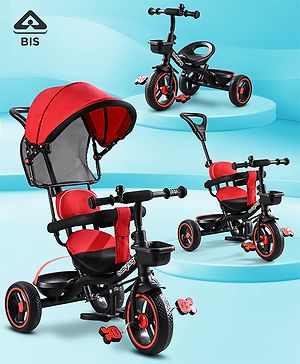
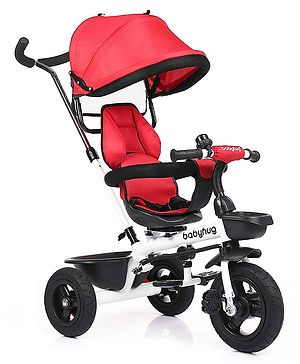
Babyhug Plug & Play Stallion Tricycle with Parental Push Handle & Foldable Canopy - Red Black| Foldable Footrest| Non Slip Pedal| High Backrest| Storage Basket| Removable Safety Rail| Cushion Seat
Regular price₹4,795.00Regular price ₹2,998.79Regular priceUnit price per₹4,795.00Sale price ₹2,998.79 37% OFFSale -
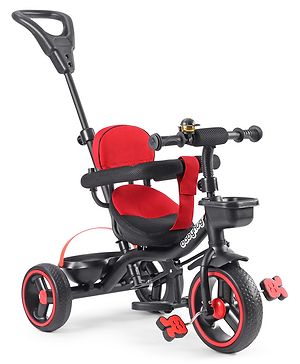
Babyhug Stalwart Plug & Play Tricycle With Parental Handle & Seat Cover - Red Black| High Backrest| Non-slip Pedals| Removable Safety Bar| Foldable Footrest| Puncture Proof Wheels| Durable Frame
Regular price₹4,395.00Regular price ₹2,799.18Regular priceUnit price per₹4,395.00Sale price ₹2,799.18 36% OFFSale -
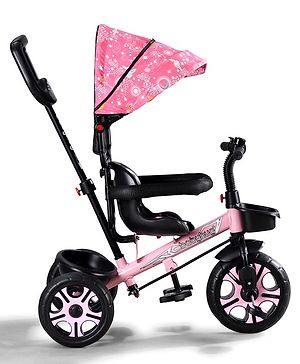
Babyhug Plug & Play Tricycle with Parental Push Handle & Foldable Canopy - Sea Green| Foldable Footrest| Non Slip Pedal| High Backrest| Storage Basket| Removable Safety Rail & Harness| Cushion Seat
Regular price₹3,995.00Regular price ₹2,245.19Regular priceUnit price per₹3,995.00Sale price ₹2,245.19 44% OFFSale -
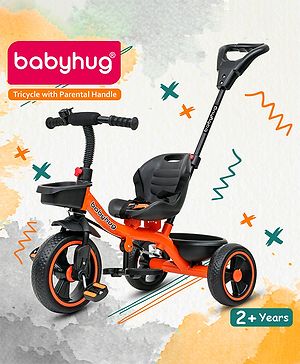
Babyhug Tricycle with Parental Push Handle-Orange| Safety Harness| Foldable Footrest| Storage Baskets| Anti-Slip Pedals| Adjustable Push Bar| Puncture Proof Wheels| Comfortable Seat| High Backrest
Regular price₹2,895.00Regular price ₹1,592.25Regular priceUnit price per₹2,895.00Sale price ₹1,592.25 45% OFFSale -
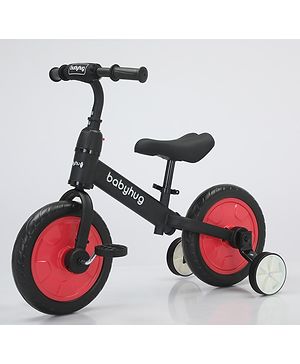
Babyhug 2 -1 Balance Bicycle 12 Inches - Red| Adjustable Seat Height| Removable Training Wheels| Removable Pedals| Puncture Proof Tyre
Regular price₹4,995.00Regular price ₹3,146.85Regular priceUnit price per₹4,995.00Sale price ₹3,146.85 37% OFFSale -
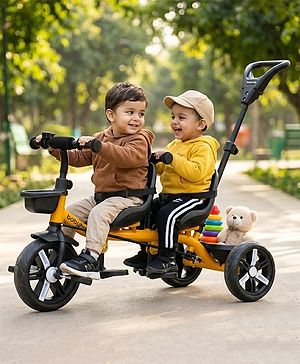
Babyhug AeroGlide DuoExplorer: 2-in-1 Twins Tricycle with Puncture Proof EVA Wheels - Yellow| Dual Seats & Parental Control Handle| Foldable Footrest| Safety Harness| Non-slip Pedals
Regular price₹3,595.00Regular price ₹2,534.48Regular priceUnit price per₹3,595.00Sale price ₹2,534.48 29% OFFSale -
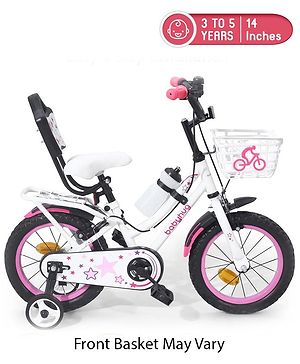
Babyhug Speedy Bicycle With Bell - Pink White| Storage Basket| Durable Brake
Regular price₹6,495.00Regular price ₹3,897.00Regular priceUnit price per₹6,495.00Sale price ₹3,897.00 40% OFFSale -
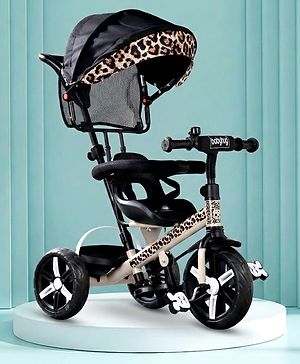
Babyhug Little Leopard Tricycle for Kids with Parental Push Handle & Canopy Toddler Ride-On Trike with Safety Harness BIS Certified Seat with High Backrest Foldable Footrest Anti-Slip Pedals - Beige
Regular price₹3,845.00Regular price ₹2,499.25Regular priceUnit price per₹3,845.00Sale price ₹2,499.25 35% OFFSale -
Babyhug Hermes Glider 5 in1 Multifunctional Kids Plug & Play Trike|360° Rotatable Seat|Rubber Wheels with Brakes|Parental Handle with Canopy |Safety Harness|Storage Basket for Boys & Girls-Red
Regular price₹10,495.00Regular price ₹5,352.45Regular priceUnit price per₹10,495.00Sale price ₹5,352.45 49% OFFSale -
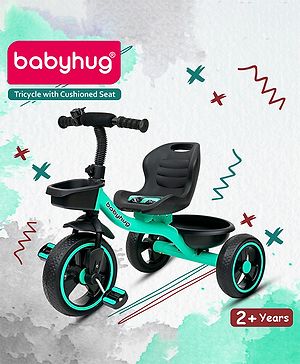
Babyhug Tricycle with Comfortable Seat & High Backrest|Storage Baskets| Anti-Slip Pedals| Puncture Proof Wheels| Easy to Assemble| Cushion Seat - Sea Green
Regular price₹2,595.00Regular price ₹1,401.30Regular priceUnit price per₹2,595.00Sale price ₹1,401.30 46% OFFSale -
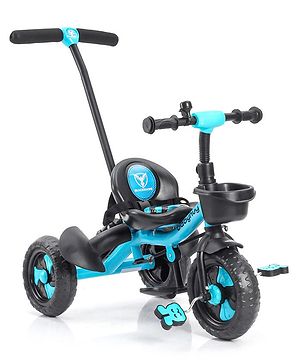
Babyhug Plug & Play Black Hawk Tricycle With Parental Push Handle & Storage Basket - Ice Blue
Regular price₹3,995.00Regular price ₹2,556.80Regular priceUnit price per₹3,995.00Sale price ₹2,556.80 36% OFFSale -
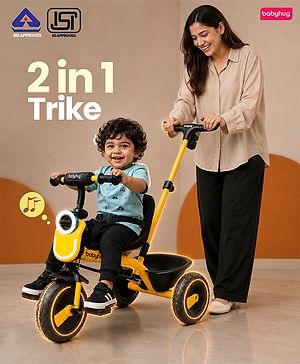
Babyhug AeroGlide 2-in-1 Tricycle - Yellow| Light & Music| Parent Push Handle| Adjustable Canopy| Puncture-Proof Rubber Wheels| Storage Baskets- Yellow
Regular price₹6,495.00Regular price ₹3,767.10Regular priceUnit price per₹6,495.00Sale price ₹3,767.10 42% OFFSale
Baby Tricycles & Bikes
Choosing the right cycle for a child depends on their age, height, riding experience and confidence. Tricycles can be a practical starting point for toddlers, while balance bikes and training-wheel cycles help children develop balance, steering and pedalling skills. As children grow, they can move to larger pedal bicycles suited to their size.
The Babyhug collection includes tricycles, training and balance bikes, and kids' bicycles with features such as parental push handles, safety harnesses, footrests, storage baskets, bells, training wheels and adjustable seats, depending on the model.
Types of Baby & Kids Cycles
Tricycles for Toddlers
Tricycles have three wheels and provide a stable riding setup for young children who are beginning to practise steering and pedalling. Selected models include parental push handles, safety harnesses, footrests, high-back seats, storage baskets and bells.
For example, the Babyhug Tricycle with Parental Push Handle is listed for 2–8 years, with a 25 kg carrying capacity, adjustable push bar, safety harness, foldable footrest and puncture-proof wheels.
Balance Bikes
Balance bikes do not use pedals and allow children to focus on balancing, steering and controlling their movement. They can be useful before transitioning to a pedal bicycle.
The Babyhug Rover 4-in-1 Plug & Play Balance Bike is listed for 2–6 years and features an adjustable seat post, trainer wheels and flat-free puncture-proof tyres.
Bicycles for Kids
Kids' bicycles are designed for children who are ready to practise independent pedalling. Depending on the model, they may include training wheels, adjustable seats and handlebars, brakes, bells and storage baskets.
The Babyhug Cruise Bicycle for Kids is listed as a 14T bicycle for children aged 3–5 years, with training wheels, a durable brake, rubber tyres and height-adjustable seat and handle.
Training-Wheel Cycles
Training wheels provide additional side support while a child learns to pedal and steer a bicycle. They can be useful for beginner riders who are not yet comfortable balancing on two wheels.
The Babyhug 2-in-1 Balance Bicycle 12 Inches is listed for 2–4 years, with removable training wheels, removable pedals, adjustable seat height and puncture-proof tyres. It has a stated carrying capacity of 30 kg.
How to Choose the Right Cycle for Kids?
The right cycle should match the child's current size and riding ability rather than age alone. Check the manufacturer's recommended age, height or size, weight capacity and intended use before choosing.
- Consider Your Child's Height: Age is a general starting point, but children of the same age can have different heights. A properly sized cycle should allow the child to sit comfortably and reach the relevant controls.
- Check Foot and Pedal Position: For bicycles, check whether the child can comfortably reach the pedals. Appropriate foot positioning can help children maintain better control.
- Choose a Manageable Weight: A cycle that is too heavy can be harder for a young child to steer and handle.
- Check the Handlebar: The handlebars should be comfortable to grip and positioned appropriately for the child's height. Adjustable handlebars can provide a better fit where supported.
- Match the Cycle to Riding Experience: Toddlers may be more comfortable on a tricycle, while children developing balance may use a balance bike. Beginner pedal riders may benefit from training wheels.
Kids Cycle Size Guide
| Age Group | General Wheel Size Guide |
|---|---|
| 1–3 years | 10–12 inches |
| 3–5 years | 12–14 inches |
| 5–8 years | 16–18 inches |
| 8+ years | 20 inches and above |
These are general ranges, not fixed requirements. Children of the same age can have different heights and riding abilities, so always check the individual product's size and specifications before purchase.
Tricycle vs Balance Bike vs Bicycle
| Cycle Type | Main Purpose | Suitable Stage |
|---|---|---|
| Tricycle | Early steering and pedalling practice | Toddlers |
| Balance Bike | Balance and steering practice | Children learning independent control |
| Training-Wheel Bicycle | Pedalling with additional balance support | Beginner pedal riders |
| Bicycle | Independent two-wheel riding | Children ready for pedal cycling |
The right option depends on your child's current riding skills. There is no requirement to follow one fixed progression, as children develop balance and coordination at different rates.
Balance Bike vs Training Wheels
| Feature | Balance Bike | Training-Wheel Cycle |
|---|---|---|
| Pedals | No | Yes |
| Main focus | Balance and steering | Pedalling and supported balance |
| Balance support | Child develops balance directly | Training wheels provide additional support |
| Suitable for | Early balance practice | Beginner pedal riding |
| Next step | Pedal bicycle | Independent two-wheel riding |
A balance bike can help a child practise balance and steering, while training wheels allow children to practise pedalling with additional side support. Choose according to your child's confidence and riding stage.
Important Features to Look For
Parental Push Handle
A parental push handle can allow an adult to guide a tricycle when the child is still developing independent control. Several tricycles in the collection include this feature.
Safety Harness or Seat Bar
Selected toddler tricycles include safety harnesses or seat safety bars. These features can provide additional restraint while the child is seated, but adult supervision remains important.
Adjustable Seat or Handlebar
Adjustable components can help accommodate a growing child where the product design allows adjustment.
Training Wheels
Training wheels can provide additional support while children learn to pedal and steer a bicycle.
Footrest
A footrest can be useful on toddler tricycles when the child is being pushed by an adult and is not actively pedalling.
Storage Basket
Many tricycles in the collection include storage baskets, which can be useful for carrying small toys or other lightweight items during outdoor play.
Bell
Some bicycles and tricycles include bells, giving children a simple way to signal their presence while riding in suitable supervised environments.
Tricycle Features for Younger Riders
For younger children, look for a configuration that matches how the tricycle will be used. A parental push handle can be useful when an adult is guiding the ride, while a safety harness, footrest and high-back seat may provide additional support depending on the model.
For example, the Babyhug Plug & Play Stallion Tricycle is listed for 12 months to 3 years, with a 20 kg carrying capacity, cushioned seat, secured front bar, 2-point harness, parental push handle and foldable canopy.
Choosing a Cycle as Your Child Grows
Children's riding needs change as they become more confident.
- For toddlers: A tricycle can provide a stable three-wheel setup for early riding practice.
- For balance practice: A balance bike allows children to focus on steering and balance without pedals.
- For beginner pedal riding: A bicycle with training wheels can provide additional support while children learn to pedal.
- For independent riding: A suitable two-wheel bicycle can be considered when the child has developed the required balance, coordination and control.
Safety Tips for Kids' Cycles
Children's cycles should always be used according to the manufacturer's recommended age, size, weight capacity and instructions.
- Choose the correct cycle size for the child.
- Check the brakes, wheels, pedals, seat and handlebars before use.
- Make sure adjustable components are securely locked.
- Check that the cycle is assembled correctly.
- Use a properly fitted helmet when riding a bicycle or other suitable riding product.
- Choose a controlled riding area away from traffic and major hazards.
- Supervise younger children during riding.
- Do not exceed the product's stated carrying capacity.
- Check the individual product listing for applicable safety certifications or markings.
Safety certification can provide information about a particular product's requirements or testing, but it does not eliminate the need for correct use and adult supervision.
Indoor vs Outdoor Riding
Indoor Riding
Some smaller tricycles and balance bikes may be suitable for supervised use on appropriate smooth surfaces where there is enough clear space. Always check the product's intended use before indoor riding.
Outdoor Riding
Tricycles and bicycles can be used in suitable outdoor areas such as parks, cycling tracks or open play areas where permitted. Choose locations away from traffic and other hazards.
The riding surface should match the product's design, and younger children should be supervised throughout the activity.
How to Help a Child Learn to Ride
Learning to ride takes practice. Start with short, supervised sessions and allow the child to become comfortable with the cycle before focusing on speed or distance.
Start with Control
Let the child practise sitting, steering, stopping and moving at a comfortable pace.
Practise Balance
For balance bikes, allow the child to focus on balancing and steering before introducing pedals.
Practise Pedalling
For bicycles with training wheels, encourage the child to practise pedalling and steering together.
Move at the Child's Pace
If the cycle feels difficult to control, check the size, seat position, handlebar position and overall weight. A cycle that is too large or heavy may make learning more difficult.
Common Kids Cycle Buying Mistakes
Choosing Only by Age
Age is useful as a starting point, but height, weight and riding ability can differ significantly between children.
Buying a Cycle That Is Too Large
A larger cycle is not necessarily a better long-term choice. Poor fit can make steering and control difficult.
Ignoring Cycle Weight
A cycle that is difficult for a child to move or control may reduce confidence during riding practice.
Focusing Only on Appearance
Colours and character designs can influence a child's preference, but size, comfort, controls, stability and safety features should come first.
Buying Advanced Features Too Early
A child who is just beginning to ride may benefit more from a simple, appropriately sized tricycle or balance bike than from an advanced bicycle.
Kids Cycle Buying Checklist
- Recommended age and size
- Child's height and weight
- Maximum carrying capacity
- Cycle weight
- Seat height and adjustment
- Handlebar position
- Wheel size and configuration
- Pedal design
- Brake system
- Training wheels, where applicable
- Safety harness or seat bar on toddler tricycles
- Parental push handle, if required
- Tyre type
- Assembly requirements
- Applicable safety certification
- Intended riding surface
Baby & Kids Cycle FAQs
What is the best cycle for kids?
For children starting around 2 years, the Babyhug Rover 4-in-1 Plug & Play Balance Bike is best for ages 2–6 years and has an adjustable seat.
What is the best cycle for a 2-year-old?
A suitable tricycle or balance bike can be considered for a 2-year-old, depending on the child's size and riding readiness. The Babyhug Rover 4-in-1 Plug & Play Balance Bike is best for 2–6 years and has an adjustable seat.
Which is better: a balance bike or training wheels?
A balance bike focuses on balance and steering without pedals, while a training-wheel cycle lets children practise pedalling with additional support. The better option depends on the child's confidence and riding stage.
What is a good tricycle for toddlers?
A toddler tricycle with an appropriate size, stable three-wheel design and features suited to the child's stage can be a practical choice. The Babyhug Plug & Play Stallion Tricycle includes a parental push handle, safety bar, 2-point harness, footrest and cushioned seat.
What size cycle is suitable for a 4-year-old?
A 12–14 inch bicycle may suit some 4-year-olds, but the correct size depends on the child's height and the manufacturer's specifications. The Babyhug Cruise Bicycle is best as a 14T cycle for children aged 3–5 years.
Which kids cycle has removable training wheels?
The Babyhug 2-in-1 Balance Bicycle 12 Inches has removable training wheels and pedals, along with an adjustable seat height and puncture-proof tyres.
What should I check before buying a kids cycle?
Check the child's height, recommended age, weight capacity, cycle size, weight, seat position, handlebar position and braking system. Also consider whether the child needs training wheels or a parental push handle.
Are balance bikes good for learning?
Balance bikes allow children to practise balance, steering and movement control without pedals. They can be useful before moving to a pedal bicycle, depending on the child's riding readiness.
Can boys and girls use the same cycle?
Yes. Children's cycles are generally selected based on size, fit, riding ability and product specifications rather than gender.
What safety gear should children use while cycling?
A properly fitted helmet is an important safety item for bicycle riding. Depending on the child's age, riding environment and experience, additional protective gear such as knee and elbow protection may also be considered.
At what age can a child start riding a cycle?
There is no single age for every child. Some toddlers start with tricycles, while balance bikes and pedal bicycles are introduced as children develop the balance, coordination and control needed for each type.
Always follow the individual product's recommended age, size and usage instructions.
Final Takeaway
The right kids' cycle should match the child's current stage rather than simply being chosen by age. Tricycles can suit toddlers beginning to explore riding, balance bikes can focus on balance and steering, and training-wheel bicycles can support early pedal practice.
Before buying, compare the child's height and weight with the product specifications and check features such as adjustable seats, training wheels, brakes, parental handles, safety harnesses and footrests where relevant.