
 This item is discontinued.


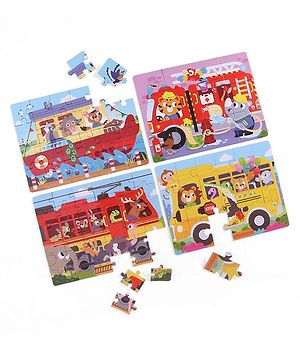


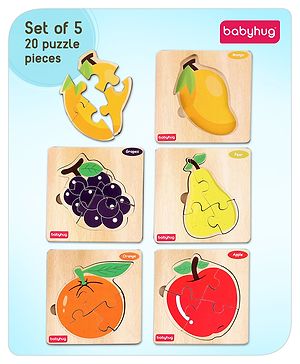
Kids Puzzles Online: Jigsaw, Wooden & Educational Puzzles for Kids
Puzzles are a fun screen-free activity that can help children practise problem-solving, matching, concentration, hand-eye coordination and fine motor skills. Babyhug offers kids puzzles in different formats, including jigsaw puzzles, wooden puzzles, board puzzles, floor puzzles, knob and peg puzzles and educational puzzles.
Parents can choose puzzles based on their child's age, interests and learning stage. Options include alphabet puzzles, number puzzles, animal puzzles, shape and colour puzzles, maths puzzles, transport puzzles and geography puzzles, making it easier to find an activity that combines learning and play.
What Are the Best Puzzles for Kids?
The best puzzle for a child is one that matches their age, abilities and interests. Younger children usually benefit from simple matching or knob-and-peg puzzles, while older children can move to multi-piece jigsaw puzzles and more challenging activities.
- Jigsaw puzzles for problem-solving and picture matching
- Wooden puzzles for hands-on learning
- Alphabet puzzles for letter recognition
- Number and maths puzzles for early numeracy
- Animal puzzles for picture recognition and vocabulary
- Shape and colour puzzles for visual matching
- Geography puzzles for learning about places and maps
- Transport puzzles for children interested in vehicles
What Are the Best Puzzles for 2-4 Year Olds?
For children aged 2-4 years, choose puzzles with larger, easy-to-handle pieces and familiar themes such as animals, alphabets, numbers, colours and shapes. Knob-and-peg puzzles can also be a good starting point for children developing their fine motor skills.
The Babyhug Premium 26 Pcs Capital Alphabet Wooden Board Puzzle introduces capital letters through a colourful wooden board and knob-and-peg format.
What Are the Best Puzzles for 4-6 Year Olds?
Children aged 4-6 years can try puzzles with more pieces, detailed pictures and slightly higher difficulty levels. Jigsaw puzzles, maths puzzles, word puzzles, geography puzzles and themed puzzle sets can offer more challenge while keeping children engaged.
Choose the difficulty according to your child's puzzle experience and ability rather than age alone.
What Are Jigsaw Puzzles for Kids?
Jigsaw puzzles are made up of individual pieces that children arrange to complete a picture. They encourage children to observe shapes, colours and patterns while working out where each piece belongs.
Babyhug offers jigsaw puzzles in themes such as animals, vehicles and educational concepts. The Babyhug 5-in-1 Premium Wooden Jigsaw Jungle Animals Puzzle Set is one option for children who enjoy animal-themed activities.
Are Wooden Puzzles Good for Kids?
Yes, wooden puzzles can be a useful screen-free activity for children when the puzzle design and difficulty are appropriate for their age. They are available in formats such as board puzzles, peg puzzles, matching puzzles and wooden jigsaw puzzles.
Babyhug's wooden puzzle range includes alphabet, maths, animal, shape and geography puzzles, allowing parents to choose an activity based on their child's interests and learning needs.
What Are Educational Puzzles for Kids?
Educational puzzles combine puzzle-solving with concepts such as alphabets, numbers, colours, shapes, animals or geography. They can make early learning more interactive by allowing children to learn through matching, arranging and completing activities.
Alphabet Puzzles
Alphabet puzzles can help children become familiar with letters through matching and visual recognition. The Babyhug 60 Pcs Capital and Small Alphabet Puzzle combines capital and small letters in a matching activity.
Number and Maths Puzzles
Number puzzles can introduce counting, number recognition, matching and early maths concepts through hands-on play. The Babyhug Wooden Maths Puzzle Board focuses on counting, number tracing and matching.
Animal Puzzles
Animal puzzles use familiar pictures to encourage matching and recognition. Younger children can start with simpler animal board puzzles, while older children can try multi-piece animal jigsaw sets.
The Babyhug Premium 9 Pcs Wooden Board Wild Animals Puzzle is designed with a knob-and-peg format for young children.
Shape and Colour Puzzles
Shape and colour puzzles encourage children to compare visual features and identify similarities. They can be useful for introducing basic shapes, colours and matching concepts.
Geography Puzzles
Geography puzzles introduce children to maps, locations and places through hands-on activities. The Babyhug India Map Wooden Pegged Puzzle is designed around India's states, union territories and capitals.
What Skills Do Kids Learn from Puzzles?
Age-appropriate puzzles can support several skills through play, including:
- Problem-solving: Children work out how pieces fit together.
- Fine motor skills: Picking up and positioning pieces involves controlled hand movements.
- Hand-eye coordination: Children coordinate what they see with their movements.
- Visual recognition: Puzzles encourage children to identify shapes, colours, pictures and patterns.
- Concentration: Completing a puzzle encourages children to focus on one activity.
- Early learning: Alphabet, number and educational puzzles can reinforce concepts introduced at home or school.
- Patience: Children learn to try different approaches when a piece does not fit.
How Do I Choose the Right Puzzle for My Child?
Start with your child's age, puzzle experience and interests. A puzzle should provide some challenge without being so difficult that the child cannot make progress independently.
- Age: Check the recommended age range on the product.
- Number of pieces: Start with fewer pieces and gradually increase the difficulty.
- Piece size: Younger children may find larger pieces easier to handle.
- Theme: Animals, vehicles, alphabets and colours can make puzzles more engaging.
- Learning objective: Choose alphabet puzzles for letters, maths puzzles for numbers or shape puzzles for visual matching.
- Puzzle format: Board, knob-and-peg, floor and jigsaw puzzles offer different levels of challenge.
Which Puzzle Is Best for Learning Alphabets?
Alphabet puzzles are a good option when parents want to introduce or reinforce letter recognition through play. Matching capital and small letters can also help children compare different letter forms.
The Babyhug 60 Pcs Colorful Match & Learn Capital and Small Alphabet Puzzle is designed around capital and small alphabet matching.
Which Puzzle Is Best for Learning Numbers?
Number and maths puzzles can make counting and number recognition more hands-on. Look for puzzles that combine numbers with counting, tracing or matching activities.
The Babyhug Wooden Maths Puzzle Board is an option for children who are practising counting, number tracing and matching.
Are Puzzles Good for Preschoolers?
Yes. Puzzles can be a useful preschool activity because they combine hands-on play with opportunities to practise matching, observation, concentration and problem-solving. The most suitable puzzle will depend on the child's age and developmental stage.
Parents can also sit with children during puzzle time and talk about the colours, objects, letters, numbers or animals shown on the puzzle.
How Can Parents Make Puzzle Time More Fun?
Parents do not always need to solve the puzzle for the child. Instead, try giving small hints and allowing the child to work out the answer.
- Ask the child what picture they are trying to complete.
- Help them identify colours or shapes on a piece.
- Ask where they think a particular piece might fit.
- Start with the edge pieces when doing a jigsaw puzzle.
- Let the child choose a puzzle based on their interests.
- Gradually introduce more challenging puzzles as their confidence grows.
Kids Puzzle Buying Checklist
Before buying a puzzle, parents can check:
- Recommended age
- Number of pieces
- Piece size and ease of handling
- Puzzle difficulty
- Material
- Theme
- Learning concept
- Storage requirements
- Whether the puzzle is suitable for independent or guided play
Kids Puzzles FAQs
Which puzzle is best for kids?
The best puzzle depends on the child's age, abilities and interests. Younger children can start with simple board, matching or knob-and-peg puzzles, while older children can try more complex jigsaw puzzles.
Are jigsaw puzzles good for children?
Yes. Age-appropriate jigsaw puzzles can encourage problem-solving, visual matching, hand-eye coordination and concentration through hands-on play.
What are the best puzzles for toddlers?
Simple puzzles with large, easy-to-handle pieces and familiar themes such as animals, colours, shapes and alphabets can be suitable for toddlers. Always follow the recommended age on the product.
What is the difference between a wooden puzzle and a jigsaw puzzle?
A wooden puzzle describes the material, while a jigsaw puzzle describes the puzzle format. A wooden puzzle can also be a jigsaw puzzle, board puzzle or peg puzzle.
Are educational puzzles useful for preschoolers?
Educational puzzles can make concepts such as alphabets, numbers, shapes and colours more interactive. They work best as part of varied play and learning activities.
How many puzzle pieces should a child start with?
There is no single piece count that suits every child. Start with a puzzle the child can manage with some support, then gradually increase the difficulty as their puzzle-solving confidence develops.
Shop Kids Puzzles Online at Babyhug
Explore the Babyhug Kids Puzzles collection to find jigsaw puzzles, wooden puzzles, board puzzles, floor puzzles, knob and peg puzzles and educational puzzles for different ages and interests. From alphabet and maths puzzles to animal, shape, transport and geography themes, choose a puzzle that fits your child's stage of learning and play.