
Baby Walkers
 This item is discontinued.
 Explore similar products from our collection.
-
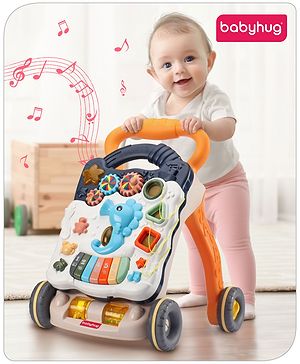
Babyhug Premium Seahorse Push Walker for Kids- Blue| Activity Walker with Music & Light for Toddlers| Fun Musical Table| Sit to Stand Multi Activity Walker| Interactive Learning Toy for 9 Months to 3 Years Kids| BIS Certified
Regular price₹3,995.00Regular price ₹2,299.12Regular priceUnit price per₹3,995.00Sale price ₹2,299.12 42% OFFSale -
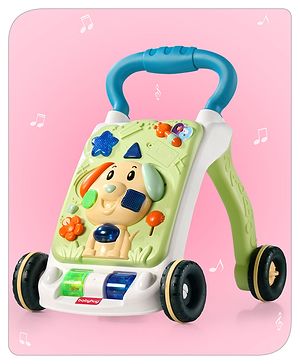
Babyhug Premium Puppy Push Walker for Kids- Green| Activity Walker with Music & Light for Toddlers| Sit to Stand Multi Activity Walker| Interactive Learning Toy for 9 Months to 3 Year Kids| BIS Certified
Regular price₹2,995.00Regular price ₹1,998.86Regular priceUnit price per₹2,995.00Sale price ₹1,998.86 33% OFFSale -
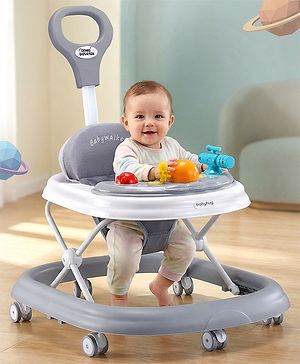
Babyhug Foldable Space Baby Walker with Parental Push Handle & Musical Toy Bar - Grey| Cushion Seat| Adjustable Height| Smooth Swivel Wheels| Removable Parental Handle
Regular price₹3,995.00Regular price ₹2,098.97Regular priceUnit price per₹3,995.00Sale price ₹2,098.97 47% OFFSale -
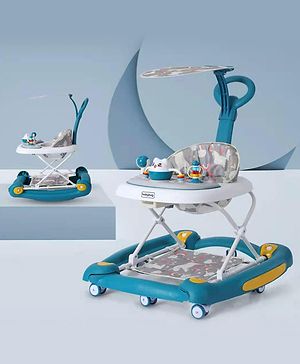
Babyhug Unicorn Foldable Baby Walker Cum Rocker With Sun Shade - Blue
Regular price₹5,995.00Regular price ₹3,117.40Regular priceUnit price per₹5,995.00Sale price ₹3,117.40 48% OFFSale -
Babyhug Permium Multifunctional 360 Baby Walker with 2 Level Height Adjustment & Musical Play Tray Cum Feeding Tray
Regular price₹2,995.00Regular price ₹1,647.25Regular priceUnit price per₹2,995.00Sale price ₹1,647.25 45% OFFSale -
Babyhug 2 In 1 Multifunctional Baby Walker Cum Rocker With 3 Level Height Adjustment & Musical Play Tray -Green
Regular price₹5,095.00Regular price ₹3,158.90Regular priceUnit price per₹5,095.00Sale price ₹3,158.90 38% OFFSale -
Babyhug 360° Musical Baby Walker with Lights Grey| 3-Level Height Adjustment| Detachable Play & Feeding Tray| Compact Fold| Smooth Swivel Wheels| Cushioned Seat| 624 Months| Removable Foot Mat
Regular price₹2,995.00Regular price ₹1,797.00Regular priceUnit price per₹2,995.00Sale price ₹1,797.00 40% OFFSale -
Babyhug Teddy Foldable Baby Walker with Toy Bar Music & Lights - Teal Blue| Adjustable Height| 360° Swivel Wheels| Detachable Toy Bar
Regular price₹3,495.00Regular price ₹1,748.90Regular priceUnit price per₹3,495.00Sale price ₹1,748.90 50% OFFSale -
Babyhug Foldable Space Baby Walker with Parental Push Handle & Musical Toy Bar - Grey| Cushion Seat| Adjustable Height| Smooth Swivel Wheels| Removable Parental Handle
Regular price₹3,995.00Regular price ₹1,873.65Regular priceUnit price per₹3,995.00Sale price ₹1,873.65 53% OFFSale -
Babyhug Champ 2 in 1 Multifunctional Rocker cum Walker with Lights I Musical Play tray cum feeding tray - Pink| Removable Foot Mat| Smooth Swivel Wheels| Compact Fold
Regular price₹5,595.00Regular price ₹2,909.40Regular priceUnit price per₹5,595.00Sale price ₹2,909.40 48% OFFSale -
Babyhug 360° Joy Baby Walker with Convertible Feeding & Musical Toy Tray - Pink| Adjustable Height| Compact Fold| Activity cum Push Walker| Smooth Swivel Wheels| Padded Cushion Seat
Regular price₹2,895.00Regular price ₹1,505.40Regular priceUnit price per₹2,895.00Sale price ₹1,505.40 48% OFFSale -
Babyhug 2 in 1 Baby Walker with Anti Fall Protection & Adjustable Height-Blue| Push Walker| Rear Wheels with Speed Control| Soft Padded Seat| Smooth Swivel Wheels| Musical Toy Tray with Engaging Toys
Regular price₹4,395.00Regular price ₹2,417.25Regular priceUnit price per₹4,395.00Sale price ₹2,417.25 45% OFFSale
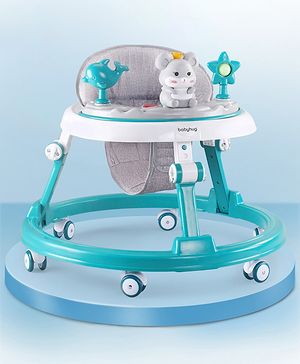
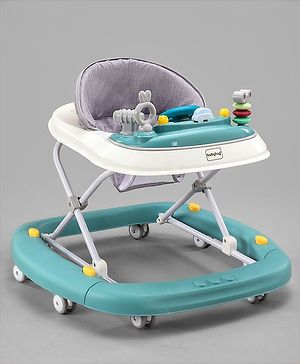
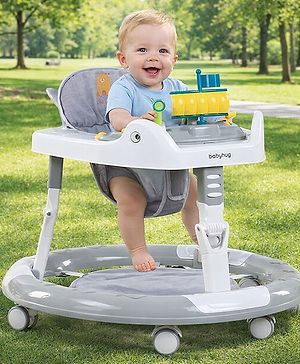
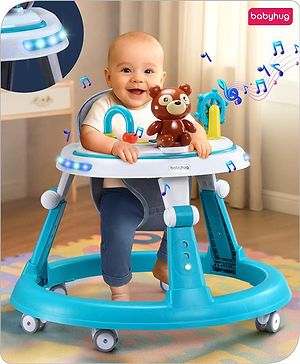
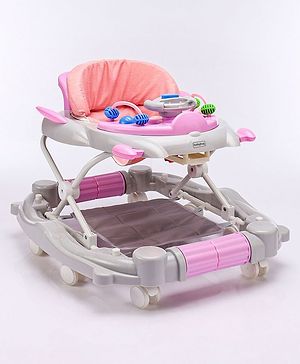
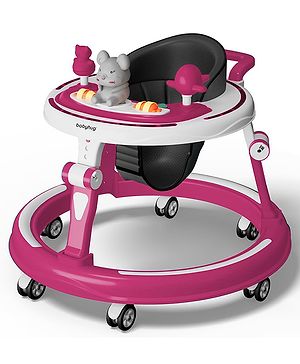
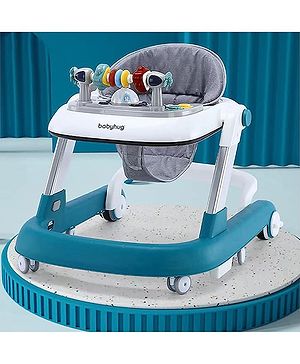
Baby Walkers for Little Explorers
Every baby reaches their movement milestones at their own pace. A baby walker can offer a way for little ones to explore their surroundings and practise movement under active adult supervision.
At Babyhug, our baby walker collection includes push walkers, regular baby walkers, walker cum rocker designs, musical baby walkers, foldable walkers and activity walkers. Each type offers different features to suit different stages, play preferences and home environments.
Depending on the model, Babyhug baby walkers may include adjustable seating, activity trays, music and lights, wheels designed for indoor movement, foldable frames and safety-focused features.
Whether you are looking for a compact walker for a smaller home, a musical walker for interactive play or a walker cum rocker for added versatility, consider your baby's developmental stage, the product's recommended limits and how you plan to use it.
How Do Baby Walkers Help Babies?
Baby walkers can provide an opportunity for supervised movement and exploration. Depending on the type of walker, they may support activities such as standing, pushing, reaching and moving around.
Parents may choose baby walkers to:
- Encourage assisted movement
- Support balance and coordination practice
- Encourage movement confidence
- Provide sensory engagement through toys, lights or music
- Keep babies engaged during supervised play
- Offer opportunities for movement and exploration
A baby walker should complement—not replace—floor play, crawling, tummy time and other natural movement activities. Always use the walker according to the manufacturer's instructions and under active adult supervision.
Types of Baby Walkers
Baby walkers come in different designs, with each offering a different way for babies to move, play and explore.
Push Walkers
Push walkers are designed for babies who are beginning to pull themselves up and explore supported standing and walking.
As your baby pushes the walker forward, they can practise:
- Balance
- Coordination
- Supported standing
- Movement confidence
Push walkers are best suited to babies who are developmentally ready for supported standing and walking. Always check the product's recommended age and usage guidance.
Walker Cum Rocker
A walker cum rocker combines walking and rocking functions in one product. Depending on the model, parents can switch between movement and rocking modes.
Benefits may include:
- Walking and movement support
- Gentle rocking
- Multi-purpose functionality
- Added versatility during playtime
Always use each mode according to the manufacturer's instructions.
Regular Baby Walkers
Regular baby walkers allow babies to move around while seated within the walker. They commonly feature a padded seat, wheels, a broad base and an activity tray.
Depending on the model, features may include:
- Comfortable padded seating
- Rolling wheels
- Wide base
- Activity tray
- Adjustable height
Regular walkers should be used on appropriate, level surfaces and only within the manufacturer's recommended age, height and weight limits.
Musical Baby Walkers
Musical baby walkers combine movement with interactive play features such as lights, sounds, toys and activity buttons.
These features can encourage:
- Sensory exploration
- Hand-eye coordination
- Interactive play
- Engagement during supervised activity
Musical features are an added play element rather than a requirement for walker use. Choose a design based on your baby's interests and your everyday needs.
Baby Walker Materials
Baby walkers are commonly made using lightweight and durable materials designed for everyday use.
Depending on the model, you may find:
- Plastic components – Lightweight and easy to clean
- Metal frames – Can provide additional structural support
- Soft fabric seats – Add comfort during supervised use
- Washable covers – Make regular cleaning easier
Always check the individual Babyhug product for its materials and care instructions.
Baby Walkers for Different Needs
The right baby walker depends on your baby's stage, your available space and the features that are most useful to your family.
Baby Walkers for Small Homes
Compact and foldable baby walkers can be convenient for apartments and homes where storage space is limited.
Look for features such as:
- Foldable design
- Compact footprint
- Easy storage
- Lightweight construction
Baby Walkers for Active Babies
Push walkers and activity walkers can be useful for babies who are ready to explore movement and enjoy interactive play.
Choose according to your baby's developmental stage and the manufacturer's recommended usage.
Baby Walkers for Playtime
Musical and activity baby walkers can make supervised play more engaging with features such as toys, lights, sounds and activity buttons.
Multi-Use Baby Walkers
Walker cum rocker models offer more than one function, combining walking and rocking modes in a single design.
Push Walker vs Regular Walker
| Feature | Push Walker | Regular Walker |
|---|---|---|
| Main use | Supported walking practice | Seated movement |
| Movement | Baby pushes the walker | Baby moves while seated |
| Position | Standing | Seated |
| Suitable stage | When baby is ready for supported standing | Depends on the model's age and developmental guidance |
A push walker may be a better fit for a baby who is already pulling up and beginning to practise supported walking. A regular walker offers a different seated movement experience.
Always follow the product's recommended age and developmental guidance.
Walker Cum Rocker vs Regular Walker
A walker cum rocker offers an additional rocking function compared with a regular walker.
| Feature | Walker Cum Rocker | Regular Walker |
|---|---|---|
| Function | Walker + rocker | Walker |
| Rocking mode | Yes, depending on model | No |
| Versatility | Multiple functions | Primarily movement |
| Activity features | Varies by model | Varies by model |
| Best for | Parents looking for added functionality | Parents looking for a standard walker |
The right choice depends on whether the additional rocking function is useful for your family's routine.
Baby Walker Features
When choosing a baby walker, look for features that support comfort, stability, adjustability and supervised play.
Wide Safety Base
A broad and stable base can help provide stability during use. It does not make a walker suitable for use near stairs, steps or other hazards.
Safety Brakes & Stoppers
Depending on the model, brakes, stoppers or anti-slip features can help control movement. Always check how these features are intended to be used.
Adjustable Height
Height adjustment can help you set the walker according to your baby's size and the manufacturer's recommended positioning.
Padded Seats
A padded seat can make supervised walker sessions more comfortable.
Smooth Swivel Wheels
Swivel wheels can make a walker easier to manoeuvre on suitable indoor surfaces.
Removable Play Tray
A removable activity or play tray can provide entertainment while also making cleaning more convenient.
Parent Handles
Some Babyhug baby walkers include parent handles that can allow an adult to guide or move the walker when the product is designed for this purpose.
How to Choose Best Baby Walker
The right Baby walker depends on your baby's developmental stage, available space, comfort needs and preferred activities.
Consider:
- Recommended age
- Height and weight limits
- Wide and stable base
- Wheel locks or stoppers, where provided
- Adjustable height
- Padded and washable seat
- Foldable design
- Available storage space
- Interactive play features
- Overall stability
- Product-specific safety instructions
Most importantly, choose a walker that is appropriate for your baby's current stage and use it exactly as directed.
Baby Walker Safety
Baby walkers require active supervision because they can give babies access to areas they may not otherwise reach. Falls, tipping and contact with household hazards can happen quickly.
For safer use:
- Keep the walker away from stairs, steps and balconies.
- Use it only on suitable, level surfaces.
- Never leave your baby unattended while using a walker.
- Check brakes and stoppers before use.
- Follow the recommended age, height and weight limits.
- Keep the walker away from hot surfaces, electrical cords and other hazards.
- Stop using the walker if the frame, wheels, brakes or other safety components are damaged.
A stable base and safety features can support safer supervised use, but they do not replace active adult supervision.
Baby Walker Safety Features
Baby walkers may include different safety-focused features depending on the model.
These can include:
- Wide safety base
- Anti-slip stoppers
- Safety brakes
- Stable wheel design
- Adjustable height
- Secure seating
- Locking mechanisms
Features vary between products, so check the individual Babyhug model's specifications before purchase.
Baby Walker Certifications & Safety Standards
Safety certification can be an important consideration when choosing a baby walker, as it provides information about the applicable safety and testing requirements for a particular product.
BIS Certification
BIS (Bureau of Indian Standards) certification indicates that the applicable product meets the relevant Indian safety and quality standards. Among the Babyhug baby walkers, the following products are currently listed as BIS Certified:
- Babyhug Zest Musical Baby Walker – Pink & White
- Babyhug Premium Puppy Push Walker – Green
- Babyhug Premium Seahorse Push Walker – Blue
Before Using a Baby Walker
Before placing your baby in a walker, check:
- Recommended age and weight range
- Height adjustment and leg positioning
- Condition of the seat and frame
- Wheel and brake function
- Safety stoppers
- Folding and locking mechanisms, where applicable
- Stability on the intended surface
- Product-specific safety instructions
Always use the walker according to the manufacturer's instructions and under active adult supervision.
Common Baby Walker Safety Mistakes
Can Baby Walkers Replace Floor Play?
No. Baby walkers should complement floor play rather than replace crawling, tummy time, standing practice and free movement.
Can Walkers Be Used Near Stairs?
No. Keep baby walkers away from stairs, steps, balconies, edges and other drop-offs.
Can Babies Overuse Walkers?
Baby walkers should be used for supervised periods rather than as a substitute for free floor movement. Give your baby regular opportunities to crawl, roll, sit, stand and explore safely on the floor.
How Long Should Babies Use Walkers?
There is no single session length that applies to every baby or every walker. Follow the manufacturer's instructions and keep sessions supervised and appropriate to your baby's developmental stage.
When Should Parents Stop Using a Baby Walker?
Stop using the walker when your baby reaches the product's recommended limits or when the walker is no longer appropriate for their developmental stage.
Baby Walker FAQs
At what age can my baby start using a walker?
The appropriate age varies by walker and by your baby's development. Always follow the specific product's recommended age, height and weight limits. Your baby should also be developmentally ready for the type of movement the walker is designed to support.
Are baby walkers safe for babies?
Baby walkers need careful, active supervision. They should be used only according to the manufacturer's instructions, on suitable surfaces and away from stairs, steps and household hazards.
Will a walker help my baby learn to walk faster?
A baby walker can provide opportunities for supervised movement, but it should not be considered a way to make a baby learn to walk faster. Babies also benefit from natural movement such as crawling, standing and floor exploration.
How long should my baby use a walker each day?
There is no universal daily duration for every baby walker. Follow the manufacturer's guidance and use the walker for supervised periods appropriate to your baby's stage.
What safety features should a baby walker have?
Depending on the model, useful features can include a wide base, stable wheels, brakes, anti-slip stoppers, secure seating and appropriate height adjustment.
Can baby walkers be used on carpeted floors?
Some walkers can be used on carpet, but movement may vary depending on the carpet and the product's wheel design. Always use the walker only on surfaces recommended by the manufacturer.
What is the difference between a push walker and a regular walker?
A push walker is designed for babies who are ready to practise supported standing and walking by pushing the walker. A regular walker allows a baby to move while seated inside the walker.
Are interactive toys necessary on a baby walker?
Interactive toys are not essential for walker use, but they can make supervised play more engaging and offer opportunities for sensory exploration and hand-eye coordination.
How do I clean and maintain a baby walker?
Clean plastic and frame components according to the manufacturer's care instructions. If the walker has a removable fabric seat, follow the recommended washing and drying instructions.
Regularly check wheels, brakes, stoppers, frame components and fasteners for signs of damage or wear.
Are eco-friendly baby walkers available?
Some baby walkers may use materials or finishes marketed as more environmentally conscious. Check the individual product details for specific material and sustainability information rather than assuming that all models have the same attributes.
Can baby walkers be used outdoors?
Only use a baby walker outdoors if the manufacturer permits it and the surface is appropriate. Keep the walker away from uneven ground, steps, slopes and other hazards, and always supervise your baby closely.
Do baby walkers affect posture?
The effect of a walker can depend on the product, how it is adjusted and how it is used. Correct height adjustment and following the manufacturer's instructions are important. Babies should also have plenty of opportunities for natural floor movement.
Is height adjustment necessary?
Height adjustment can help accommodate a growing baby and support a more appropriate position when the walker is designed with this feature. Follow the manufacturer's guidance when adjusting the height.
Can baby walkers replace crawling and floor play?
No. Crawling, tummy time, standing and free floor movement remain important parts of early movement and exploration.
How much space is needed to use a baby walker safely?
Use a walker in a clear, level area away from stairs, balconies, sharp edges, hot surfaces, electrical cords and other household hazards.
Can walkers be folded for storage?
Some Babyhug baby walkers have foldable designs that make them easier to store. Check the individual product specifications to confirm whether it folds and how the folding mechanism should be used.
Do baby walkers have weight limits?
Yes. Always follow the weight, height and age limits specified for the individual walker.
Are walkers suitable for premature babies?
Parents should consult their pediatrician before choosing a baby walker for a premature baby, particularly when the baby has specific developmental or mobility considerations.
Can baby walkers help with muscle development?
Baby walkers can provide opportunities for movement, but they should not be considered a substitute for natural floor-based movement. Crawling, tummy time, standing and other age-appropriate activities are also important.
Do baby walkers require assembly?
Many baby walkers require some assembly before use. Follow the supplied instructions carefully and make sure all components are securely fitted before placing your baby in the walker.
Are baby walkers suitable for small apartments?
Compact and foldable Babyhug baby walkers can be convenient for smaller homes. Consider the walker's folded dimensions, storage requirements and the clear floor space needed for safe use.
Should baby walkers have swivel wheels?
Swivel wheels can make a walker easier to manoeuvre on suitable surfaces. The best wheel design depends on the individual product and how you plan to use it.
Can baby walkers tip over?
A wide and stable base can help reduce the risk of tipping, but no walker should be used near stairs, steps, balconies or other drop-offs. Always supervise your baby and follow the manufacturer's instructions.
Is a walker cum rocker better than a regular walker?
Neither is automatically better. A walker cum rocker offers additional functionality, while a regular walker may be preferable if you are looking for a simpler design. Choose according to your baby's stage and your family's needs.
When should I stop using a baby walker?
Stop using the walker when your baby reaches the manufacturer's recommended limits, when the product no longer provides an appropriate fit, or when your baby has reached a stage where the walker is no longer suitable.